Mycoremediation
Investigating how selected fungi may transform, bind, or help remove environmental contaminants under carefully controlled conditions.
Arkansas Delta · Research & education
Fungal systems for healthier soils.
Exploring how fungi and soil microorganisms can help restore damaged ecosystems, strengthen soil function, and shape practical approaches to regenerative agriculture.
What we study
Investigating how selected fungi may transform, bind, or help remove environmental contaminants under carefully controlled conditions.
Observing the relationships among fungi, bacteria, plants, organic matter, and the physical structure of living soils.
Exploring biological approaches to soil aggregation, nutrient cycling, water resilience, and long-term agricultural function.
Studying fungi as decomposers, symbiotic partners, ecosystem engineers, and essential drivers of nutrient movement.
Research & experiments
Delta Spore is building a transparent project archive where each experiment can be followed from its first question through methods, observations, results, limitations, and references.
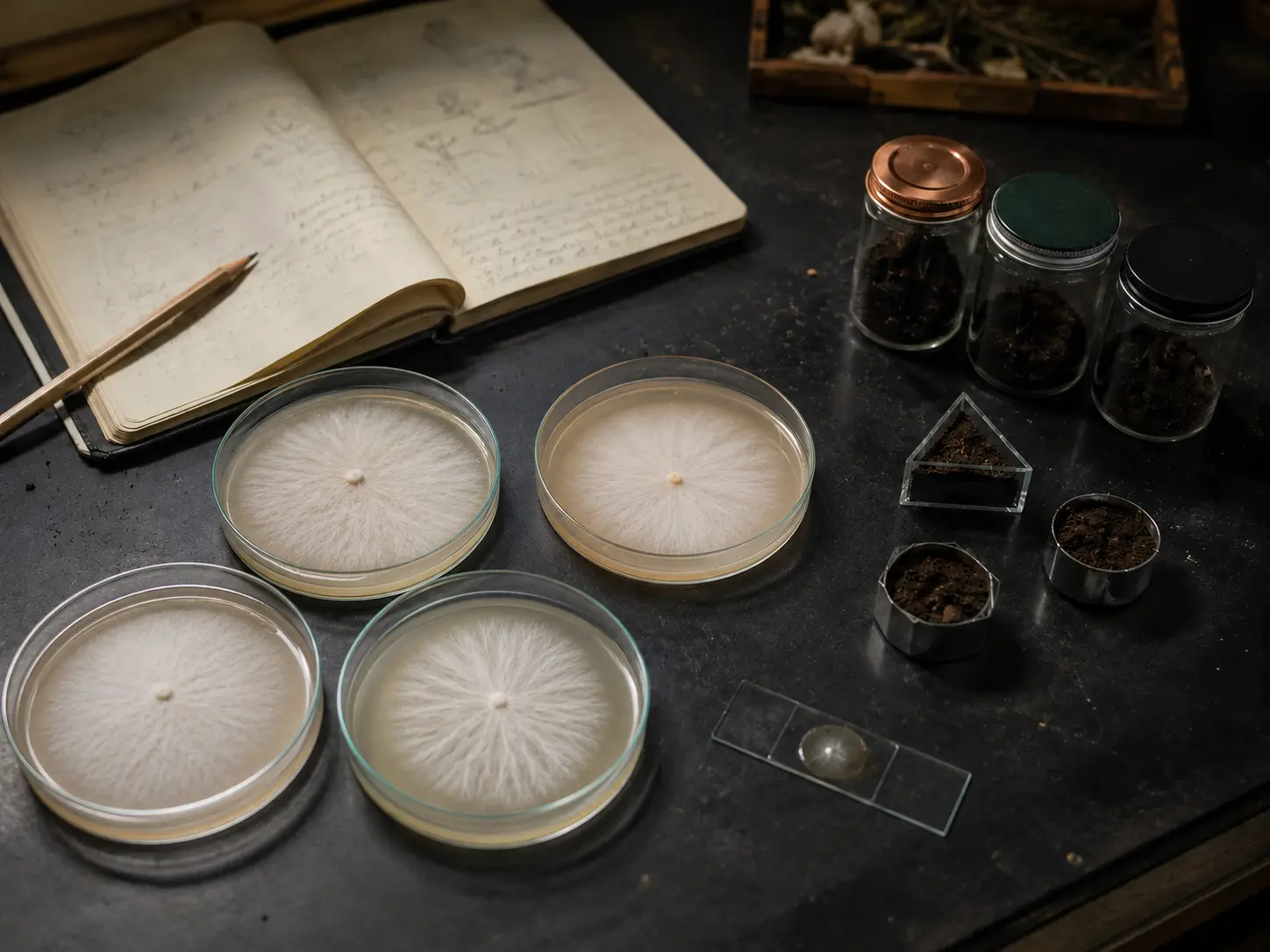
A comparative soil experiment examining how partially spent oyster mushroom substrate influenced CO₂ respiration, pH, nitrogen indicators, moisture, and visible structure.
Read the published accountComparing colonization patterns across locally relevant organic substrates and environmental conditions.
Building species- and contaminant-specific questions before any controlled treatment trial begins.
Documenting visible structure, decomposition, moisture, and biological activity across soil samples.
Developing repeatable ways to observe root-zone changes without overstating what can be inferred.
A framework for comparing biologically informed soil practices through transparent field documentation.
Field Notes
Evidence practice: each Field Note distinguishes published findings, Delta Spore observations, working hypotheses, and unanswered questions. Original publications are clearly linked.
How spent mushroom substrate may support soil biological activity—and what Sydney's undergraduate comparison revealed.
Originally published by Mycopreneur, this Field Note follows Sydney's undergraduate comparison of control soil with soil amended using partially spent oyster mushroom substrate.
The study tracked CO₂ respiration, pH, ammonia and nitrate indicators, moisture, and visible structure. The amended treatment showed higher respiration and several encouraging changes during the observation period. These are preliminary observations from a limited student study—not a universal performance claim.
Read the original article on MycopreneurDecomposition, aggregation, nutrient movement, and the reach of roots.
Fungi perform several jobs at once. Saprotrophic fungi break down plant residues and return elements to biological cycles. Fungal hyphae move through small pore spaces, interact with soil particles, and contribute to stable structure.
Mycorrhizal fungi form associations with plant roots, extending the zone through which plants and microbes exchange resources. The role of any one fungus must still be understood within the larger soil community.
A network is not one organism. It is an ecology of exchanges, competition, decay, and renewal.
Belowground systems contain overlapping communities of fungi, bacteria, roots, microfauna, organic matter, water, and minerals. Their interactions influence nutrient availability, decomposition, plant health, and resilience.
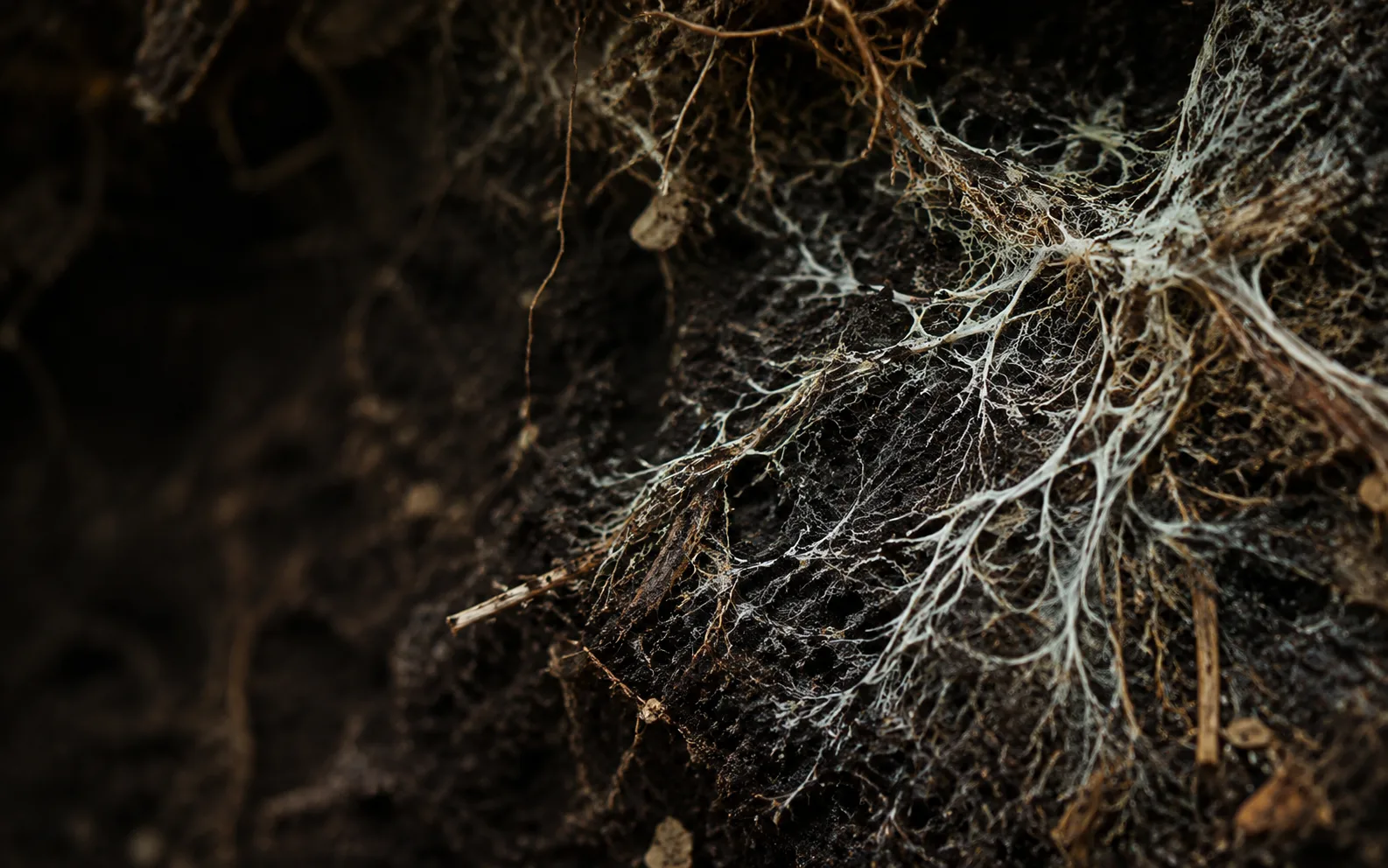
Understanding that network takes more than a photograph of visible mycelium. Useful evidence can combine microscopy, cultivation, chemistry, field measurements, molecular tools, and carefully chosen controls.
Future applications
Over time, carefully documented research may support new tools, collaborations, education, and restoration strategies.
These are development directions, not currently offered commercial remediation or consulting services. Any future application will follow the evidence, relevant testing, and appropriate professional standards.
About Delta Spore
Delta Spore grew from a fascination with the work fungi do: decomposing complex material, building relationships with plants, moving nutrients, reshaping substrates, and responding to disturbance.
Delta Spore is the research and education platform of Delta Spore Supply LLC, an Arkansas-based venture being built to support ecological inquiry, practical experimentation, future products, and responsible collaboration.
The long-term goal is to explore where fungal biology, soil microbiology, and regenerative agriculture can intersect to restore ecological health—and to document that exploration with intellectual honesty as it grows.
Delta Spore Supply LLC was founded by Sydney, a biology student in Arkansas whose research interests center on fungi, soil microbial communities, bioremediation, and practical ecological restoration. Delta Spore is currently a student-led research and science communication platform in development, not a claim of operating a commercial laboratory.
Research timeline
Biology education and an early focus on soil microbiology, fungal ecology, and environmental restoration.
Independent cultivation, substrate trials, soil observations, and the development of repeatable documentation practices.
Academic projects, posters, literature synthesis, field observations, and methods grounded in testable questions.
A long-term platform for fungal research, ecological education, partnerships, and carefully developed future products.
Connect
Reach out about research connections, regenerative agriculture, environmental organizations, science communication, or future project updates.
Receive field notes, research updates, experiments, and Delta Spore project news.
Research updates only. No selling your address, no inbox overgrowth.